Top 11 Co-Working Space Trends in Bangalore for 2026 (And What They Mean for Your Business)
Bangalore’s flexible workspace market is in a full-scale evolution. The city that pioneered India’s startup ecosystem is now leading its co-working revolution — driven by hybrid work adoption, rising commercial rents, and a generation of professionals who’ve experienced better.
From AI-optimised desk booking systems to wellness-first office designs and suburban satellite hubs in areas like Kalyan Nagar and HBR Layout, the co-working space landscape in Bangalore looks fundamentally different in 2026 than it did just three years ago.
Here are the 11 trends defining it — and what each one means for your business.
1. Hybrid Work Is Now the Default — Not the Exception
Hybrid work is no longer a pandemic compromise. It’s the standard operating model for Bangalore’s IT companies, funded startups, and even traditional businesses. Employees expect 2–3 days in-office per week at most; companies need infrastructure that supports distributed teams without committing to full-time private offices.
What this means for co-working: demand for flexible memberships, drop-in day passes, and team hot-desking arrangements has increased significantly. Operators are building hybrid packages specifically designed for companies that need 10–20 desk-days per month rather than 250.
For businesses in Bangalore, this shift makes co-working the natural operational backbone — cost-effective, scalable, and perfectly aligned with how modern teams actually work.
2. Suburban Co-Working Is Booming — Especially in North & East Bangalore
The days of every professional commuting to MG Road or Koramangala are fading. Bangalore’s notorious traffic, combined with the rise of remote-first culture, has created a massive opportunity for well-located suburban co-working spaces.
Areas like Kalyan Nagar, HBR Layout, Horamavu, Whitefield, and Hebbal are seeing real demand from professionals who want premium workspace close to home — without the Central Business District premium or the 90-minute commute.
Social CoWorking Spaces built its location strategy around exactly this insight. Our hubs in Kalyan Nagar (two locations), Horamavu, and HBR Layout serve the dense residential and commercial belt of North and East Bangalore — where thousands of IT professionals, entrepreneurs, and remote workers live and prefer to work.
See our locations and find the hub closest to you: Explore Social CoWorking Spaces in Bangalore →
3. AI-Powered Workspace Management
Technology is transforming how co-working spaces operate behind the scenes. In 2026, smart workspace management systems are becoming standard in premium Bangalore co-working spaces — automating everything from desk booking and meeting room allocation to energy management and member experience personalisation.
For members, this means less friction: book a desk from your phone, see real-time availability, and get meeting room reminders automatically. For operators, AI optimisation improves space utilisation and reduces waste. For businesses, it means a smoother, more professional experience every day.
4. Wellness-Centred Office Design
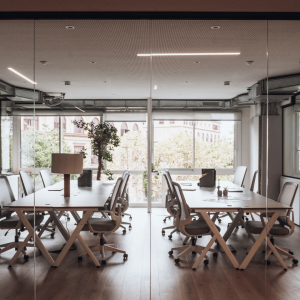
Bangalore’s corporate burnout statistics are well-documented. Long hours, high-pressure environments, and urban congestion have made employee wellbeing a top priority for forward-thinking companies. In response, co-working operators are redesigning their spaces from the ground up with wellness as a core design principle.
This means more than a foosball table in the pantry. The wellness co-working trend in Bangalore includes:
- Biophilic design — plants, natural materials, and green walls
- Maximised natural light and ventilation
- Ergonomic furniture across all workspace zones
- Dedicated meditation and relaxation pods
- Outdoor and terrace working areas
Companies choosing wellness-designed workspaces report measurably higher employee satisfaction and lower absenteeism — making it a genuine business investment, not just an aesthetic choice.
5. Niche Co-Working Spaces for Specific Industries
Generic open-plan co-working is evolving into something more intentional. Bangalore’s diverse economy — IT, fintech, legaltech, creative agencies, consulting firms — is driving demand for workspaces that cater to specific professional communities.
Industry-specific co-working benefits include access to sector-relevant networking, tailored amenities (like podcast booths for content creators, or secure data infrastructure for fintech teams), and a community of professionals who understand your domain.
While Social CoWorking Spaces welcomes professionals from all industries, our locations naturally attract IT, tech, and startup communities — creating an organic ecosystem where collaboration and referrals happen naturally.
6. Flexible Leases Are Replacing Traditional Contracts
In an uncertain economic climate, Bangalore businesses are increasingly resistant to long-term lease commitments. The co-working model was built for exactly this environment — monthly memberships, no large deposits, and the freedom to scale up or down without penalties.
In 2026, even enterprise clients who once signed 3-year office leases are exploring managed office arrangements within co-working campuses — retaining the branded private space they need while gaining the flexibility to adjust headcount without renegotiating a lease every time.
Learn more about our flexible workspace options: How to Choose the Right Co-Working Space for Your Business →
7. Virtual Office Demand Is Accelerating
Not every business needs a physical desk every day. Solopreneurs, e-commerce founders, remote consultants, and international companies expanding into India all need one thing: a credible Bangalore business address. Virtual offices meet this need precisely.
Virtual office demand in Bangalore is growing rapidly, driven by GST registration requirements, the rise of solo professionals, and businesses testing new markets before committing to physical infrastructure.
Read our complete guide: Virtual Office in Bangalore — What It Includes and Who Needs One →
8. Community Programming and Events
The best co-working spaces in Bangalore are increasingly functioning as professional communities, not just office buildings. Regular programming — startup meetups, investor sessions, skill workshops, founder breakfasts — transforms a workspace into an ecosystem where businesses grow through each other.
Members of active community-driven co-working spaces report faster business development, more referrals, and stronger professional networks than those working in isolation. For early-stage startups especially, this community effect can be a meaningful growth accelerant.
9. Enterprise and Managed Office Solutions
Large IT firms and multinational corporations are discovering what startups have known for years: flexible office arrangements offer significant operational advantages. Managed office solutions within co-working campuses give enterprises private, brandable, secure workspaces with the operational flexibility to adjust team sizes annually rather than contractually.
Bangalore’s IT corridor is seeing particular growth in enterprise-level co-working adoption — especially for satellite teams, project hubs, and overflow capacity during growth phases.
10. Workation and Location-Flexible Working
Bangalore professionals are increasingly adopting location-independent work lifestyles — spending time between Bangalore, smaller cities, and remote destinations while maintaining their professional commitments. Co-working space memberships that offer multi-location access support this lifestyle directly.
This trend also benefits businesses: a team member who can work productively from a co-working hub during a work trip is a happier, more committed employee than one chained to a specific building.
11. Sustainability as a Business Standard
Bangalore’s business community is maturing on sustainability. ESG commitments, green building certifications, and eco-conscious office choices are increasingly important to companies, their clients, and their employees.
Co-working spaces contribute to sustainability by nature — shared infrastructure means dramatically lower per-capita energy consumption compared to private offices. Many Bangalore co-working operators are going further, pursuing green certifications, installing energy-efficient systems, and building waste reduction initiatives into daily operations.
What These Trends Mean for Your Business in 2026
Taken together, these 11 trends point to one clear conclusion: the co-working space in Bangalore is no longer an alternative to a real office — it IS the real office for most modern businesses.
Whether you need a hot desk for one, a managed suite for fifty, or a virtual address for a remote-first company, Bangalore’s flexible workspace market in 2026 has a solution designed for you.
Explore the 10 key benefits of co-working spaces in Bangalore → to see exactly what you’d be gaining.
Social CoWorking Spaces is ahead of every trend on this list. Tour our Kalyan Nagar, Horamavu, or HBR Layout spaces and see the future of Bangalore’s co-working scene firsthand. Book a free visit at socialcoworkingspaces.com

 by admin
December 30, 2024
Comments Off on Virtual Office in Bangalore: The Complete Guide for Startups & Businesses (2026)
by admin
December 30, 2024
Comments Off on Virtual Office in Bangalore: The Complete Guide for Startups & Businesses (2026)